

Thirty years is a long time in any industry. In technology, it is a lifetime.
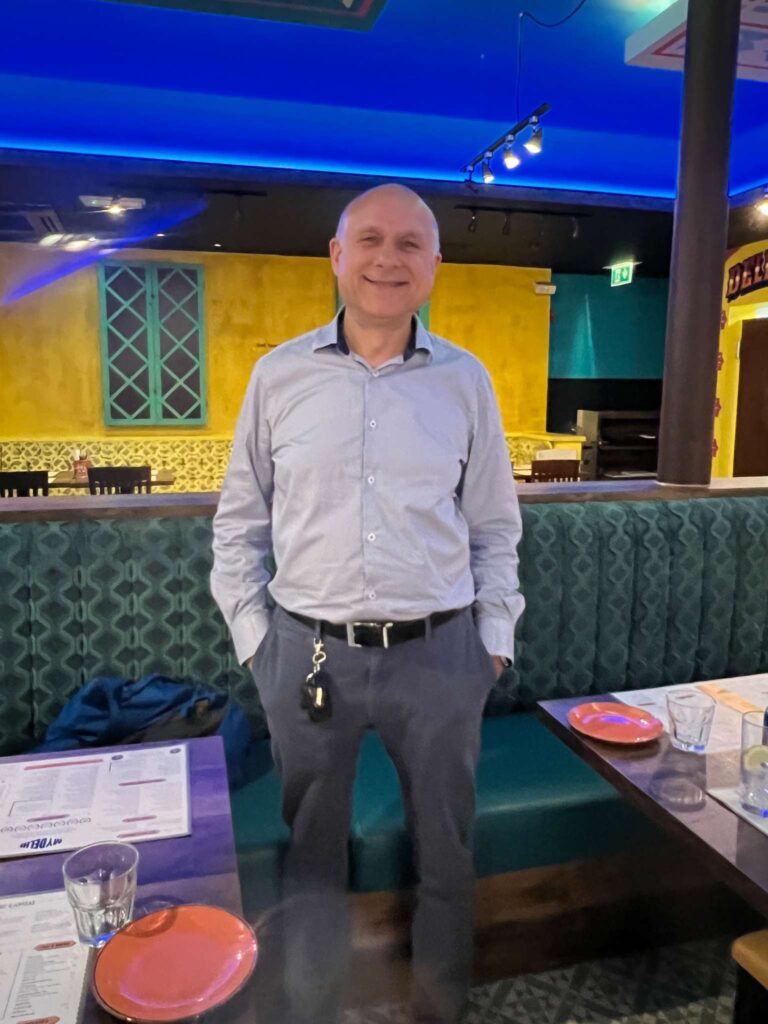
This month, we say a fond farewell to Nigel Jethwa, one of our longest-serving project managers, as he heads into a well-earned retirement. Over three decades, Nigel has been part of some of our most significant moments as a business, supported countless clients through their journey with Symphony, and been a steadying presence for everyone lucky enough to work alongside him.
We wanted to mark the occasion properly. So we asked Nigel to reflect on his time at MCR in his own words.
Q1. You have been with MCR Systems for 30 years. What does that journey look like when you look back on it, and what are you most proud of?
“When I joined MCR back in October 1995, we were a smallish company but nationwide, working across hospitality and retail. In those early days we were a reseller, selling other people’s hardware and software, which meant we weren’t always in control of our own destiny. If a supplier didn’t want to fix a bug or improve their product, we were stuck with it. That was frustrating, because we were customer-facing and we could see the problems clearly.
What I’m most proud of is being part of the decision to build our own software. We sat down as a team and came up with a list of over 100 requirements for what Symphony needed to be, and the number one priority was always: make it easy for the end user. Not easy for the programmer, easy for the person actually using it every day. That philosophy shaped everything.
I’m also proud of the customer relationships we built. There are people I’ve worked with since the late 90s who are still with us today, and when I told some of them I was retiring, they were genuinely upset. That kind of trust, where a customer comes to you before making a decision because they value your advice, is worth more than any contract. It tells you the work meant something.”
Q2. What has changed most about the way we work and the technology we deliver over your time here, and what has stayed the same?
“When I started, everything moved by letter. You’d write to a customer to arrange a training visit, wait for a reply, then travel out to them for three days of structured training. It was slower, but it was manageable and thorough. Then mobile phones arrived, then email and the pace changed completely.
Technology has brought enormous benefits, without question. But the flip side is that it created an expectation of constant availability. Customers and sometimes the business itself, began to assume you were reachable at all hours. That erosion of work-life balance is the single biggest change I’ve seen, and not a positive one. People’s wellbeing matters and we shouldn’t be normalising working at all hours just because the tools make it possible.
What has stayed the same and what should never change, is the importance of human connection. Pick up the phone. Talk to the customer. Within the first minute of a conversation, you’ll often know exactly what the problem is, in a way that three emails back and forth will never tell you. People want to speak to people, and that truth hasn’t changed in 30 years.”
Q3. What would your advice be to someone just starting out in their career, and what are you most looking forward to in the next chapter?
“Be a sponge. When you join a business, don’t rush to a title or a specialism. Take the time to understand every part of the operation, from sales through to prep, from project management through to support. Go out on site with engineers. Sit with the people doing the work and ask why things are done the way they are. Not to criticise, but to genuinely understand. If you spot a way to improve something, raise it through conversation. That’s how the business grows.
Every day is a school day. After 30 years, I still learn things that make me think, ‘I didn’t know that.’ The moment you think you know it all is the moment you stop being useful to your customers and your colleagues.
And always listen more than you talk. Customers don’t always tell you everything, but what they do tell you will point you in the right direction if you’re paying attention.
As for my next chapter, I’m looking forward to seeing the world. Experiencing different cultures, different places, different people. Life is rich, and there’s a lot of it still to enjoy.”
From everyone at MCR Systems, thank you Nigel. It has been a privilege. Enjoy every moment of what comes next.